Characteristics Of The Indian Economy - On The Eve Of Independence | British Rule

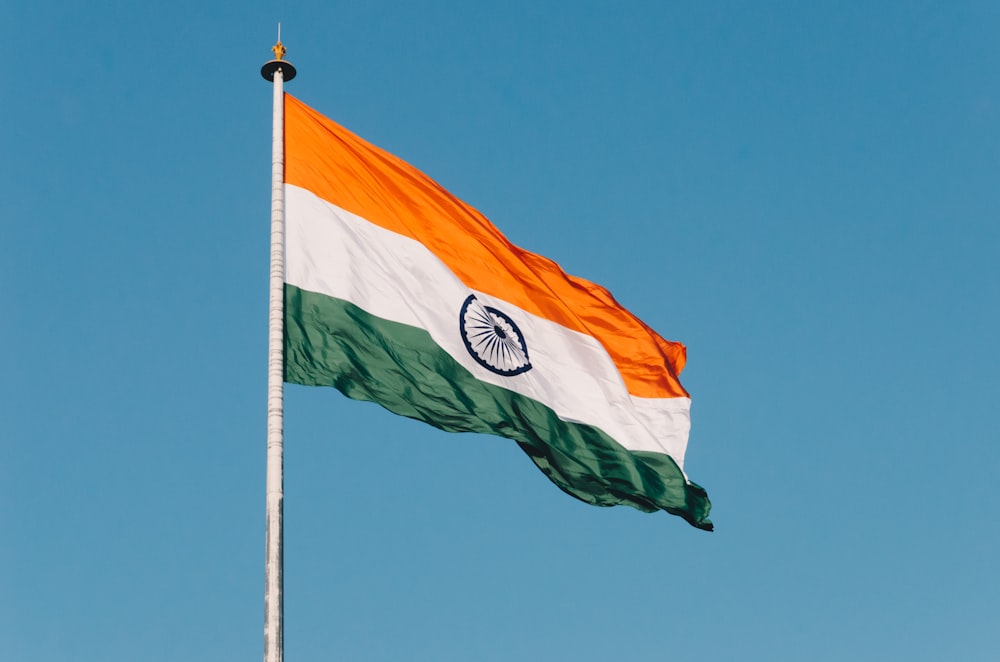
                             flag hanging on pole 

Before 1947, India was ruled by the British government. Britishers do all the things which is profited for their country i.e. Britain. Britishers had cheated and fraud with the Indian economy before the independence of the India.

Let us discuss the main features of the Indian economy before the independence of the country:-
  • Stagnant Economy  :-  In ancient times, when there was a British rule in India, Indian economy was completely a stagnant economy.
A stagnant economy is the economy which shows little or no growth in income.
In the year between 1865-1925, the growth rate of per capita income in India as low as 0.5 per cent per annum and between 1925-1950 it was just about 0.1 per cent per annum.                                                                                                                                                                                    
On the account of stagnation, Indian peoples faced a lot of problems such as poverty, etc. Bulk of the Indian population lived in poverty. Standard of living of the people remained miserably low. Epidemics and Famines were a recurring phenomenon.                                                                            
  • Backward Economy :-  Before the eve of independence, Indian economy was considered as backward economy because of British rule.
In the year 1947-1948, per capita income in India was just Rs. 230. This implies poverty, unemployment, starvation, etc. in the Indian economy.
The bulk of the Indian population was become very poor, without sufficient food clothing and shelter. Unemployment was rampant.                                                                                                               
  • Agricultural Backwardness :-  It is explained by the following facts :-
⟶  Approx 72 per cent of the working population of India was engaged in the agricultural sector. But, its contribution to country's GDP was only 50 per cent.                                                        
⟶  Productivity was extremely low. Thus, per hectare of output of wheat was only 660 kilograms, and of rice just 665 kilograms.                                                                                     
⟶  In the year 1947-48, the total output of the total foodgrain is just about only 527 lakh tonnes. It is only enough for subsistence farming.
  • Industrial Backwardness :-  Following points signifies the industrial backwardness of the Indian economy - on the eve of independence:-
⟶  There was a virtual lack of basic and heavy industries in the country.                                    
⟶  Production of machines was almost negligible.                                                                      
⟶  Small-scale and cottage industries were almost ruined.                                                          
⟶  For the requirement of the bulk of capital-goods, Indian industry was dependent upon imports from Britain.
  • Rampant Poverty :-  In the British rule, bulk of the Indian peoples became very poor.
People were not getting two square meals a day. Hence, problem of starvation arises. Peoples lacked shelter and clothing. This was largely owing to widespread unemployment which was caused by the destruction of handicraft industries.
  • Poor Infrastructure :-  Before 1947, when India is ruled by the British government, the infrastructure of the country is undeveloped.
Infrastructure development (including means of communication and transport, generation of power/energy) was extremely low. In 1948, power generation capacity of the country is merely 2,100 MW. The total length of the railway lines was recorded as 53,596 km. Roads are not well developed only pucca roads had a coverage of 1,55,000 km only.
  • Limited Urbanization :-  Before the independence of the country, bulk of the Indian population lived in villages or rural areas.
According to recorded data in 1948, only 14 per cent of the pf the Indian population lived in urban areas while about 86 per cent of the population lived in urban areas or villages. Rural population lacked opportunities outside agriculture. This leads to compounded their poverty.
  • Heavy Dependence On Imports :- The country had to depend on imports of machinery or other capital-goods which are used in the process of production.
Armed forces of the country is also depended heavily on foreign imports for the most of the defence equipments. Besides, several consumer goods like sewing machines, medicines, kerosene oil, bicycles, etc. used to be imported from abroad. This shows how India is heavily depended on imports of goods. 
  • Semi-feudal Economy :-  At the time of independence, Indian economy is neither feudal nor a capitalist economy.
In British rule, Indian economy was a mixed economy or a semi-feudal economy. Such an economy had a mixture of feudalistic and capitalist modes of production. Feudalistic mode of production leads to low productivity. Low productivity leads to backwardness and poverty in the economy.
  • Colonial Economy :- Indian economy was a colony of British government.
It implied exploitation of the Indian economy for the benefit of the British economy. Following observations indicates how Indian economy suffered at the hands of British rules.                                                                                                                                                                                      
⇾  British government curbed domestic industry by imposing heavy taxes.                                    
⇾  Indian economy was used as a source of raw material for the British industries.                        
⇾  Exports of raw material were almost duty-free. Thus, natural resources in India were drained for the growth of British industry.                                                                                                   
⇾  Atrocities were committed on the Indian artisans so as to force them to close their cottage industries. This led to destruction of the Indian handicrafts.


So these are the features of the Indian economy - on the eve of independence. Here's we seen that how Britishers do badly with the Indians. They always had done cheat and fraud with the Indian economy. That's why in modern times India is still a growing country.


Comments

Post a Comment

Popular posts from this blog

Detailed Information About National Income

A Complete Information Of   National Income INTRODUCTION When we undertake the study of national economics, we are interested in macroeconomics aggregates such as, aggregate income, output, employment, prices, consumption, savings, investment etc. Just as there are accounting conventions, measure the performance of business, there are conventions for analyzing the economic performance of a nation.  National income means the net value of final  goods and services produced within the domestic territory of a country in an accounting year plus the net factor income from abroad.  The basic fundamental principle of national income is based on the following basis:                         In a nation Production=Sale=Income ∴ GDP:  The aggregate value of all the final goods and services produced in the domestic territory of the country during a period, generally a year. Domestic territory is defined to incl...

Fiscal Policy - Meanings, Objectives, Types | Detailed Review

I NTRODUCTION: FISCAL POLICY The macroeconomics perspective, the focus is on the aggregate economic activity of governments, say, aggregate expenditure taxes, transfers and issues of government debts and deficits and their effects on aggregate economic variables such as aggregate output, aggregate employment, inflation, global economic growth etc. These, in case, form the subject material of fiscal policy. The connotation of fiscal policy as a strategy for achieving certain socio economic purpose was not perceived or widely acknowledged before 1930 due to the faith in the fixed role of government advocated by the then prevailing laissez-faire approach. Great Depression and the consequent instabilities made policymakers support a more proactive role for governments in the economy. However, later on, markets fail to achieve optimal outcomes and the need for government intervention to combat those market failures. In latest times, especially after being portended by the global financial c...

Control Of Money Supply | Important Terms - CRR, SLR, RR, BR, RRR, Open Market Operations

Control Of Money Supply By The Central Bank                             The central bank of the country adopts various measures to handle or control the supply of money in the economy. Largely, these measures relate to credit supply of the commercial banks. These are broadly classified as: Quantitative Instruments, and Qualitative Instruments. (A) Quantitative Instruments Of Credit Control Qualitative Instruments are those instruments of credit control which focus on the overall supply of money in the economy. Supply of money is lowered to tackle inflation, and it is raised to tackle deflation. Following are the points which are used in quantitative instruments of credit control in the economy:- Bank Rate: Bank rate refers to the rate of interest at which the central bank lends money to the commercial banks. It relates to instant (immediate) loan requirement of the commercial banks. When bank rate is increased, marke...